 Donald Trump will certainly not go down in history as the Conservation President. At the current rate, his legacy will be as our first Despoiler-in-Chief.
Through a series of executive orders, secretarial directives, and regulatory rollbacks, the current Trump administration is systematically pulverizing public lands protections. A short list illustrates the scope of this reversal during just the past 18 months:
- Drilling: Trump is about to finalize a major relaxation of bonding requirements to cover cleanup costs for abandoned oil & gas wells on public lands. These rules were designed to help slow the growth of orphaned or abandoned wells, now estimated to exceed 800,000, which are fouling our landscapes and where the taxpayer has been stuck with the bill for cleanup after then operator has gone bankrupt. In addition, Trump has proposed dramatically shortening public comment periods on an expanded number of lease sales while eliminating requirements that operators submit waste minimization plans along with their drilling permit applications. This will make it harder to police bad operators.
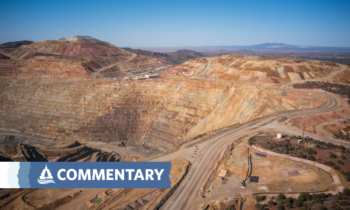
- Mining: One of Trump’s early executive orders greenlights mining projects across the country and prioritizes mineral production on public lands, designating mining as the primary use of those lands. His order applies to all mining projects for copper, uranium, potash, gold, and any other mineral, element, compound or materials deemed critical.
- Logging: Trump directives would dramatically increase timber production from national forests and other public lands, directing federal agencies to rescind any regulations which create an “undue burden” on logging. Overall, forest health concerns, such as protecting sources of clean water, are all now subordinated to the goal of maximizing timber production.
- Off-Road Vehicles: Trump has revoked executive orders issued by both Presidents Nixon and Carter to curb off-highway vehicles use to protect environmental values and prevent conflict with other recreational users. This move opens hundreds of thousands of miles of dirt roads and trails to ORV traffic without limitation. Off-road “wreckreation” is already etching long-term degradation in public lands where they are allowed.
- Hunting: Trump has directed that any restrictions on hunting and fishing be lifted whenever possible from public lands. This means eliminating prohibitions on building hunting stands that damage trees, use of hunting dogs and vehicles to retrieve animals, and hunting along trails. Orders also include axing bans on lead-based ammunition in refuges with migratory bird populations and forbidding agencies from imposing any new restrictions on lead-based ammo. More than 130 park wildlife species are exposed to or killed by ingesting lead or prey contaminated with lead, and lead contamination is the leading threat to birdlife, especially bald eagles, hawks, and other birds from loons to condors.
- Grazing: New policies to promote public lands grazing would open another 24 million acres, an area the size of Kansas, to commercial livestock grazing. In addition, they would set a “a goal of a no net loss of Animal Unit Months” (an Animal Unit Month is the equivalent of a cow and a calf grazing for one month) and maximize any existing “authorization of livestock use.” This expansion is taking place despite the fact more than a third of current rangeland is failing to meet minimum land health standards due to overgrazing.
At the same time, system-wide protections are being shredded. Principal among them are –
- The Endangered Species Act: The White House is now rewriting regulations to reduce protection for imperiled species by limiting critical habitat designations and making economic considerations a countervailing concern in decision-making. In addition, the Trump administration convened the rarely used Endangered Species Committee – nicknamed the “God Squad” because it has the power to strip legal protection from a species and condemn it to extinction – which exempted 600,000 square miles in the Gulf of Mexico from Endangered Species Act jurisdiction over specious “national security” (aka, oil & gas production) concerns. That move is expected to doom a large baleen whale species, the already critically endangered Gulf of Mexico Bryde’s whale, to extinction.
- Wilderness Lands: Interior Secretary Burgum has ordered land-management agencies to review restrictions on managing wilderness and wilderness-quality lands, potentially opening up some of the most pristine areas to motorized and mechanized activities, from logging, mining, and energy development to off-road-vehicle recreation and personal watercraft. Many of the most iconic national parks, such as Yellowstone, Grand Canyon, and Big Bend, do not have an acre of Congressionally-designated wilderness, and their backcountry lands are protected from development only by agency policy — a layer of protection now at risk.
- National Environmental Policy Act: The Trump White House has scrapped almost 50-years’ worth of rules for how to conduct reviews under the National Environmental Policy Act (NEPA). It is rescinding all Council on Environmental Quality regulations governing NEPA, meaning that agencies will not have to consider the cumulative impacts of projects and are urged to approve construction of projects such as pipelines, power plants, bridges, and highways across the nation without any rigorous environmental review.
The combined impact of all these moves — some of which are just now coming into effect — is staggering. The changes promote wholesale abuse of America’s public landscapes on a scale we have never seen before.
Republicans often cite the conservation legacy of Theodore Roosevelt as their inspiration. But Teddy is spinning in his grave at the sheer force of unmitigated industrial, commercial, and recreational havoc on our public lands that is about to be unleashed.
 Jeff Ruch is the former Executive Director and Pacific Director of PEER. He now serves as Senior Counsel.